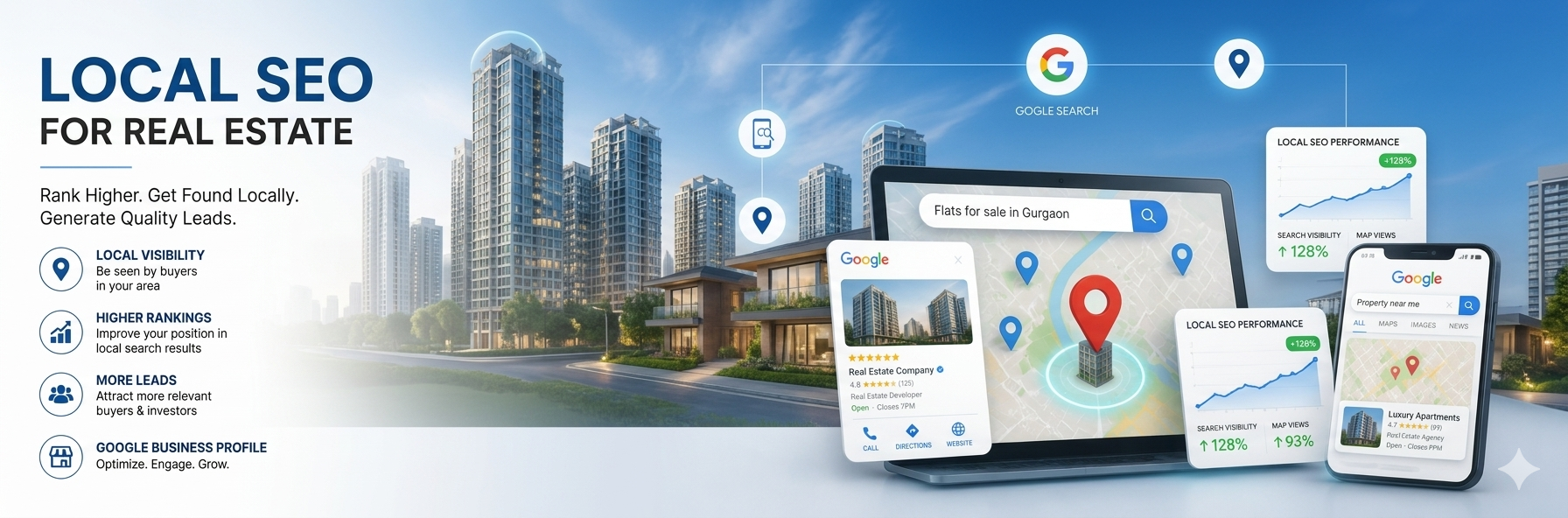
Ranking a real estate website on Google requires a strategic combination of technical SEO, high-quality content, local optimization, and a strong user experience.
 July 01, 2026


published: July 01, 2026

Ranking a real estate website on Google requires a strategic combination of technical SEO, high-quality content, local optimization, and a strong user experience. To improve search visibility, real estate businesses need to optimize their website for relevant location-based keywords, create valuable content, build authority through backlinks, and ensure their pages are easily discoverable by search engines.
A well-optimized real estate website can attract more organic traffic, reach potential buyers, and generate qualified leads without relying only on paid campaigns. In this guide, we will explore the key SEO strategies that help real estate websites rank higher on Google and improve their online presence.
The majority of property buyers begin their search online. Before making an inquiry or scheduling a site visit, they research locations, compare projects, read reviews, and evaluate developers through search engines. When your website ranks higher on Google, it benefits from:
Google's primary goal is to provide users with the most relevant and valuable search results. To determine rankings, Google evaluates several factors, including:
A successful SEO strategy addresses all of these areas simultaneously.
Before optimizing your website, you must understand what your audience is searching for. Many real estate websites target broad, highly competitive terms, but the real opportunity lies in identifying high-intent keywords that align with buyer behaviour.
The right keyword strategy helps attract users at every stage of the buying journey.
A visually appealing website is important, but search engines also prioritize functionality and user experience.
At GTF Technologies, website development is designed with both users and search engines in mind, ensuring every digital experience supports visibility and conversion goals.
Content remains one of the strongest ranking factors in SEO. Google rewards websites that consistently provide valuable information to users.
Well-optimized content helps establish authority while attracting organic traffic.
Real estate is a location-driven business, making local SEO for real estate one of the most important ranking strategies. When users search for:
Google prioritizes businesses with strong local signals.
Local SEO Best Practices
Optimize Google Business Profile
Collect Customer Reviews
Create Location-Specific Pages
Use Local Keywords
Strong local SEO helps real estate brands dominate their target markets.
The future of SEO is increasingly influenced by artificial intelligence and predictive analytics. Modern SEO strategies use data to identify opportunities faster and optimize performance more effectively.
Through its AI Innovation ecosystem, GTF Technologies integrates advanced technologies that help real estate brands stay ahead of changing search trends.
Ranking a real estate website requires more than isolated SEO tactics. It requires a structured framework where every element contributes to visibility and business growth.
This integrated approach ensures SEO efforts directly support business objectives rather than simply improving rankings.
The search landscape continues to evolve, creating new opportunities for forward-thinking brands.
Brands that embrace these trends today will gain a competitive advantage tomorrow.
Ranking a real estate website on Google is no longer about shortcuts or quick fixes. It requires a strategic combination of keyword research, technical optimization, local SEO, high-quality content, website performance, and continuous improvement.
The brands that consistently appear on the first page of Google are the ones that invest in long-term digital growth rather than temporary tactics. By building authority, creating valuable content, and optimizing every aspect of the user experience, real estate businesses can attract qualified traffic, generate better leads, and increase conversions.
With expertise spanning SEO, website development, content marketing, AI innovation, and performance-driven real estate digital marketing strategies, GTF Technologies helps real estate brands transform their websites into powerful lead-generation engines that deliver measurable results and sustainable growth.