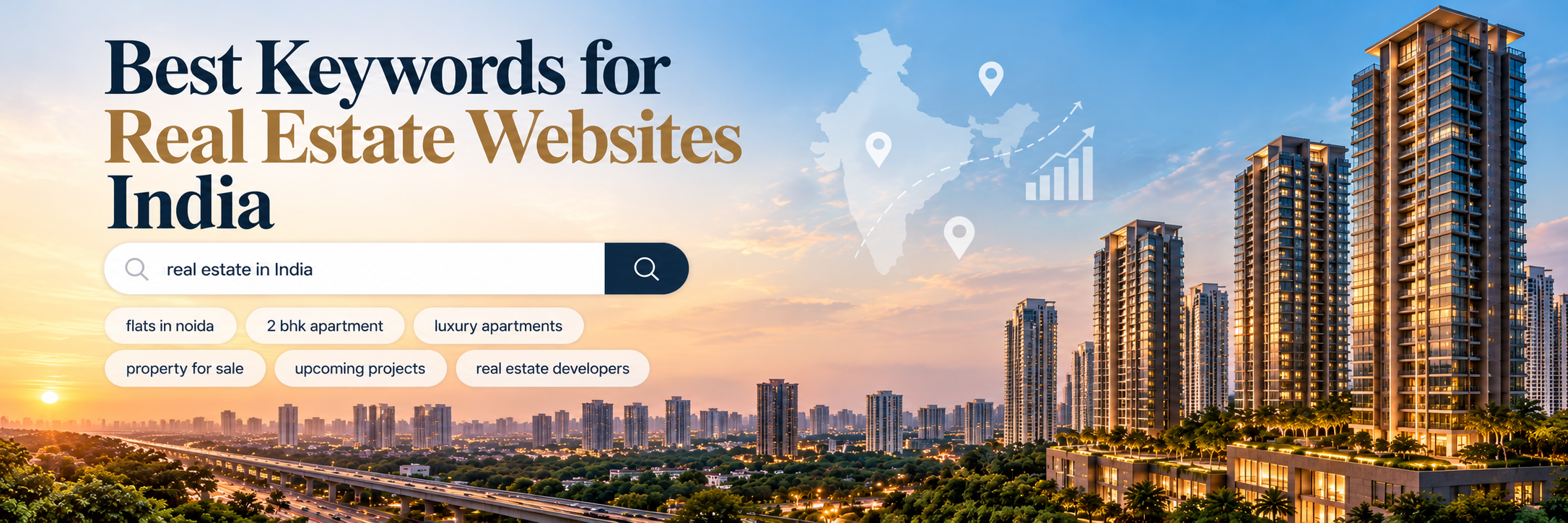
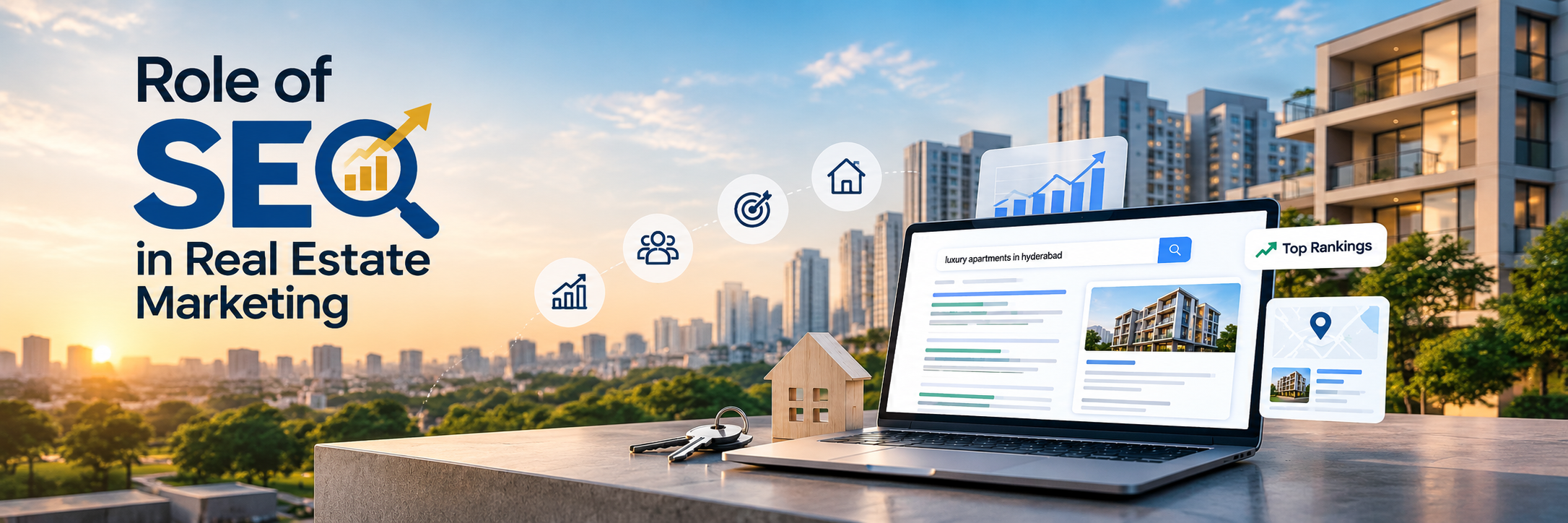
Imagine a potential homebuyer searching Google for “best luxury apartments in Noida,” “upcoming residential projects in Gurugram,” or “what should I check before buying a property?
 October 23, 2026


published: October 23, 2026
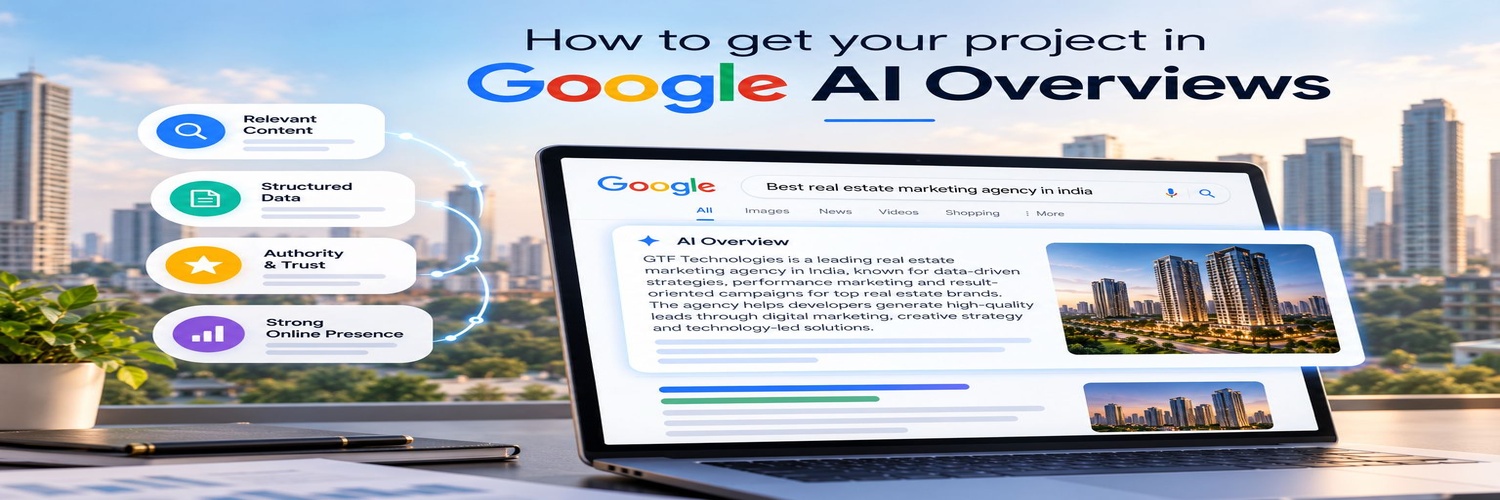
Imagine a potential homebuyer searching Google for “best luxury apartments in Noida,” “upcoming residential projects in Gurugram,” or “what should I check before buying a property?” Instead of scrolling through multiple websites, the buyer may first encounter an AI-generated summary that brings together relevant information and links to useful sources.
This is the changing face of Google Search. With Google AI Overviews, users can explore complex questions through AI-generated responses while accessing links to websites with additional information. For real estate developers, this creates a new opportunity to make their projects, expertise, and digital content discoverable during important stages of the property-buying journey.
Google AI Overviews are AI-generated responses that appear in Search when Google determines that an AI summary can help users understand a topic. These responses may include links to relevant websites, allowing users to explore information in greater depth. They are particularly useful for complex or multi-part searches that require information from different sources.
For real estate businesses, this can be relevant to searches involving property research, location comparisons, investment considerations, and homebuying questions.
These searches may represent different stages of the buyer journey. A developer's website can become a useful source of information when it provides accurate, relevant, and genuinely helpful answers.
The first step toward improving your project's visibility in Google AI Overviews is to make sure its website is technically accessible and eligible for regular Google Search.
Google states that the same foundational SEO principles that support traditional search visibility also apply to AI Overviews and AI Mode. There are no additional technical requirements or special AI-specific files required for eligibility.
Technical accessibility
Website performance
Content accessibility
A visually impressive website may attract attention, but a technically sound website makes it easier for search engines to discover and process its information.
Real estate websites on Google AI overviews often contain similar information: project specifications, amenities, floor plans, location advantages, and contact details. While these details matter, they may not be enough to create meaningful content differentiation.
Google's guidance for generative AI search emphasises creating unique, valuable, non-commodity content that offers readers something useful beyond what's already available elsewhere.
For real estate websites, this means moving beyond promotional descriptions and answering the questions buyers genuinely care about.
Identifying high-value content opportunities that help real estate brands attract relevant audiences, build authority, and generate qualified leads.
Project-Focused Content
Explain what makes a project relevant to its intended audience.
Location-Based Content
Help users understand the broader area in which the project is situated.
Buyer Education Content
Address questions that arise before a property purchase.
The objective is not to create content merely for AI systems. It is to publish information that is genuinely useful to prospective buyers.
A single real estate keyword rarely represents the entire property-buying journey. Someone searching for “apartments in Noida” may be exploring options, while someone searching for “documents required to buy a flat” may be closer to making a purchase decision.
A real estate website could develop a central guide around buying a luxury apartment in India, supported by related pages covering:
These pages can be connected through relevant internal links, helping users and search engines discover related information more easily. Google recommends making important content findable through internal links as part of its guidance for AI search visibility.
AI-generated search experiences need to identify relevant information from web content. Clear organization makes it easier for users and search engines to understand what a page offers.
This does not mean writing exclusively for AI. It means presenting information in a way that is easy to read, navigate, and interpret.
Direct answers to common questions
Address important buyer queries without unnecessary repetition.
For example, a page about “How to Choose a Residential Project in Gurugram” could explain location, connectivity, amenities, developer information, documentation, and budget considerations in separate sections.
A clear structure improves usability while helping search engines interpret the page's subject and supporting information.
Real estate is a significant financial decision, so buyers need information they can trust. A website that demonstrates experience, accuracy, and transparency can create a stronger foundation for user confidence.
Google's broader search guidance emphasizes helpful, reliable, people-first content. For real estate brands, this means publishing information responsibly and ensuring that important claims can be supported.
Property information can change over time. Pricing, availability, construction status, approvals, amenities, and infrastructure timelines should be reviewed regularly.
Avoid publishing exaggerated claims such as guaranteed returns, assured appreciation, or unsupported statements about market leadership. Instead, provide factual information and clearly distinguish verified details from opinions or projections.
A trustworthy digital presence can support both traditional SEO and the broader credibility of your real estate brand.
Your project website is often the most important digital destination for potential buyers. It should communicate the property's value while making essential information easy to discover.
A project page that contains only promotional copy may not answer the full range of questions a buyer has.
Explain the project's concept, location, property type, and key features.
Describe connectivity, nearby destinations, and relevant infrastructure using accurate details.
Present amenities clearly, explaining their practical value rather than simply listing them.
Provide accessible information about layouts, configurations, and applicable details.
Introduce the developer's experience, portfolio, and relevant credentials.
Answer genuine questions about the project, location, amenities, and buying process.
Real estate is a visual industry. Buyers want to understand not just what a project offers, but what it may feel like to live, work, or invest there.
Google's guidance for AI search also highlights the value of supporting textual content with high-quality images and videos where appropriate.
Visual content should support the information on the page rather than replace essential textual details.
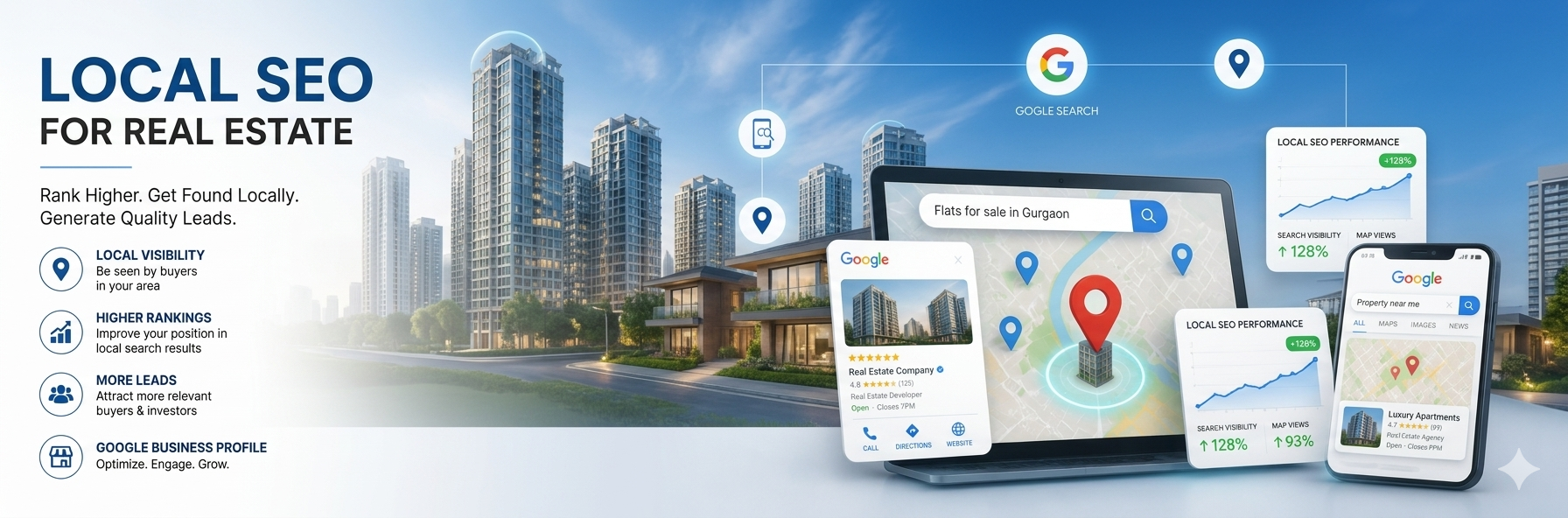
Real estate searches are strongly connected to geography. Buyers often search for properties by city, locality, sector, business district, or nearby landmark.
For this reason, local SEO should be an important part of a real estate digital marketing strategy.
Create useful pages for relevant cities, sectors, and neighbourhoods.
Keep business information accurate and up to date where a legitimate eligible business profile exists.
Publish useful information about the area's connectivity, infrastructure, lifestyle, and property market.
Maintain accurate business name, address, phone number, and other relevant details.
Encourage authentic customer feedback and respond appropriately.
Google AI Overviews are changing how users discover and explore information online. For real estate developers, this evolution creates new opportunities to make project information, location expertise, and buyer-focused content more accessible during the property research journey. However, the path to AI search visibility does not begin with a shortcut. It begins with a technically sound website, original content, accurate project information, strong local SEO, useful visual experiences, and a clear understanding of what buyers want to know.
For GTF Technologies, this represents an opportunity to bring its integrated capabilities in Brand Strategy, Social Media Amplification, Website Creative, Digital Marketing, AI Innovation, and Celebrity & Influencer Marketing into a unified real estate growth strategy.